Potassium Channel
KcsA
Potassium channels are the most widely distributed type of ion channel and are found in virtually all living organisms. They form potassium-selective pores that span cell membranes. Potassium channels are found in most cell types and control a wide variety of cell functions. Potassium channels function to conduct potassium ions down their electrochemical gradient, doing so both rapidly and selectively. Biologically, these channels act to set or reset the resting potential in many cells. In excitable cells, such asneurons, the delayed counterflow of potassium ions shapes the action potential. By contributing to the regulation of the action potential duration in cardiac muscle, malfunction of potassium channels may cause life-threatening arrhythmias. Potassium channels may also be involved in maintaining vascular tone.
All Product Categories
-
Potassium Channel Inhibitors
(662)
View all products
-
Potassium Channel Agonists
(31)
View all products
-
Potassium Channel Antagonists
(38)
View all products
-
Potassium Channel Activators
(237)
View all products
-
Potassium Channel Modulators
(39)
View all products
-
Potassium Channel Chemical
(1)
View all products
-
Potassium Channel Controls
(11)
View all products
-
Potassium Channel Related Products (1109)
Related Products (1109)

-
Antibodies (6)
-
Related Compound Screening Libraries (1)
-
Guanosine 5'-diphosphate sodium, 96% (HPLC)
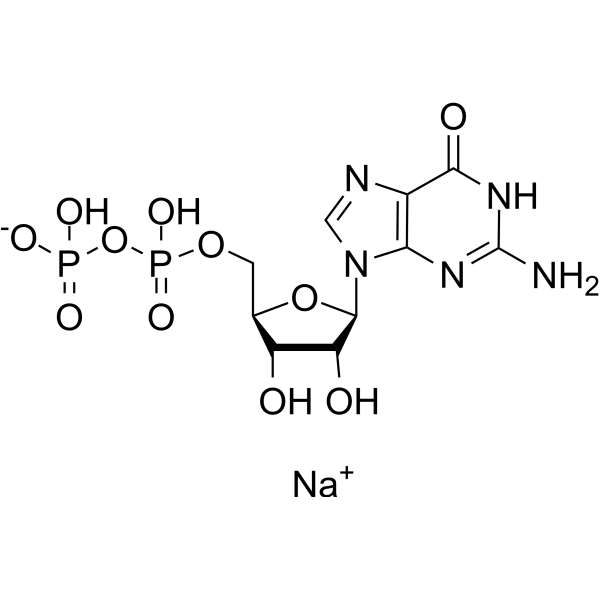 0 ImagesSynonyms: GDP sodium, Type I, 96% (HPLC)Guanosine 5'-diphosphate (GDP) sodium, 96% (HPLC) is a nucleoside diphosphate that activates adenosine 5'-triphosphate-sensitive K+ channel. Guanosine 5'-diphosphate sodium, 96% (HPLC) is an iron mobilizer, which forms a complex with hepcidin to inhibit the hepcidin-ferroportin (FPN) interaction and modulates the IL-6/stat-3 pathway. Guanosine 5'-diphosphate sodium, 96% (HPLC) ameliorates the Turpentine-induced anemia of inflammation (AI) in mice when combined with FeSO4. Guanosine 5'-diphosphate sodium, 96% (HPLC) can be used in the research of AI.
-
NS8593 hydrochloride
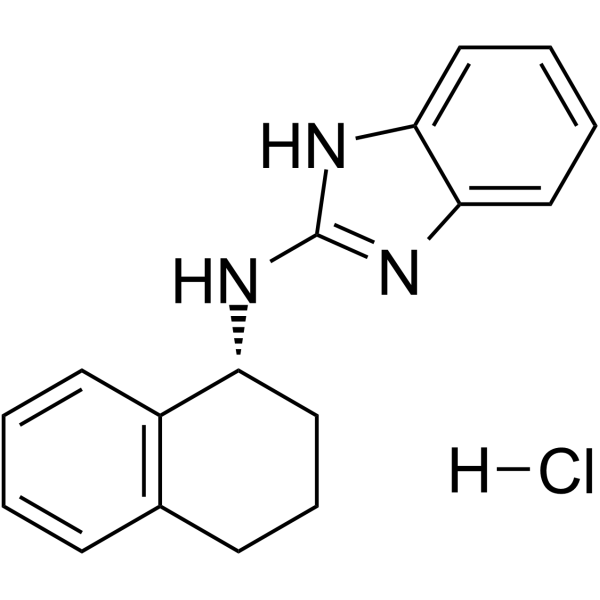 0 ImagesNS8593 hydrochloride is a potent and selective small conductance Ca2+-activated K+ channels (SK channels) inhibitor. NS8593 hydrochloride reversibly inhibits SK3-mediated currents with a Kd value of 77 nM. NS8593 hydrochloride inhibits all the SK1-3 subtypes Ca2+-dependently (Kds of 0.42, 0.60, and 0.73 μM, respectively, at 0.5 μM Ca2+), and does not affect the Ca2+-activated K+ channels of intermediate and large conductance (hIK and hBK channels, respectively).
-
Paxilline
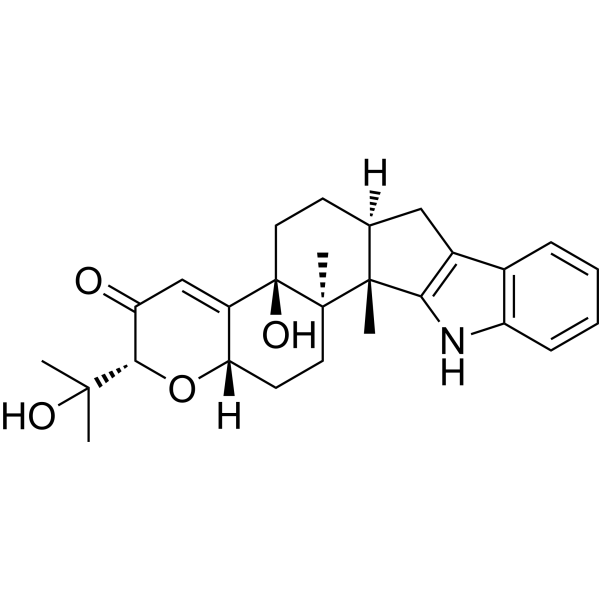 0 ImagesPaxilline is an indole alkaloid mycotoxin derived from Penicillium paxilli, which effectively inhibits the BK channel through a channel-blocking mechanism. Paxilline also inhibits sarco/endoplasmic reticulum Ca2+-stimulated ATPase (SERCA), with IC50 values ranging from 5 μM to 50 μM for different SERCA isoforms. Paxilline exhibits significant anticonvulsant and neuroprotective effects, as well as certain antioxidant activity.
-
Meclofenamic acid
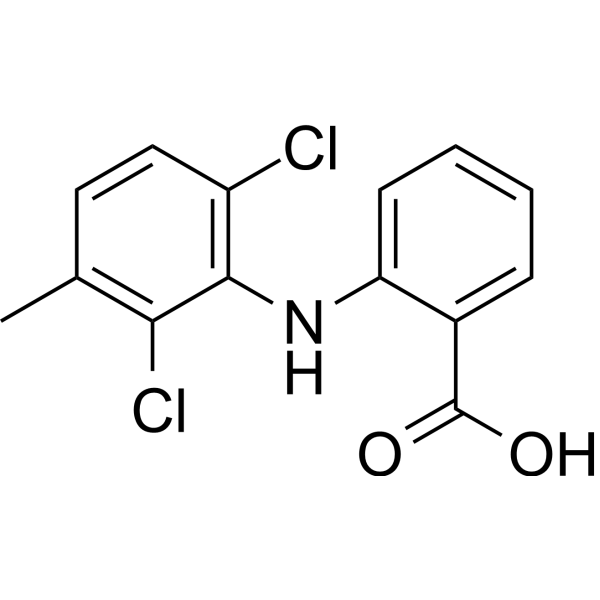 0 ImagesMeclofenamic acid (Meclofenamate) is a non-steroidal anti-inflammatory agent. Meclofenamic acid is a highly selective FTO (fat mass and obesity-associated) enzyme inhibitor. Meclofenamic acid competes with FTO binding for the m(6)A-containing nucleic acid. Meclofenamic acid is a non-selective gap-junction blocker. Meclofenamic acid inhibits hKv2.1 and hKv1.1, with IC50 values of 56.0 and 155.9 μM, respectively.
-
L-Palmitoylcarnitine chloride
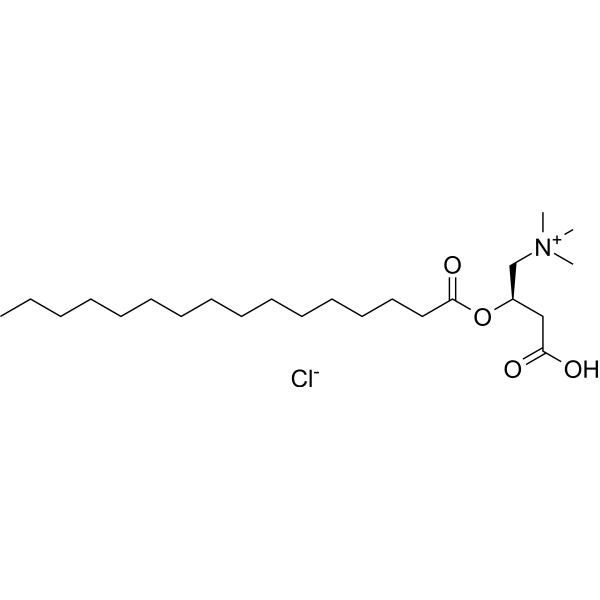 0 ImagesL-Palmitoylcarnitine chloride, a long-chain acylcarnitine and a fatty acid metabolite, accumulates in the sarcolemma and deranges the membrane lipid environment during ischaemia. L-Palmitoylcarnitine chloride inhibits KATP channel activity, without affecting the single channel conductance, through interaction with Kir6.2.
-
MDL12330A
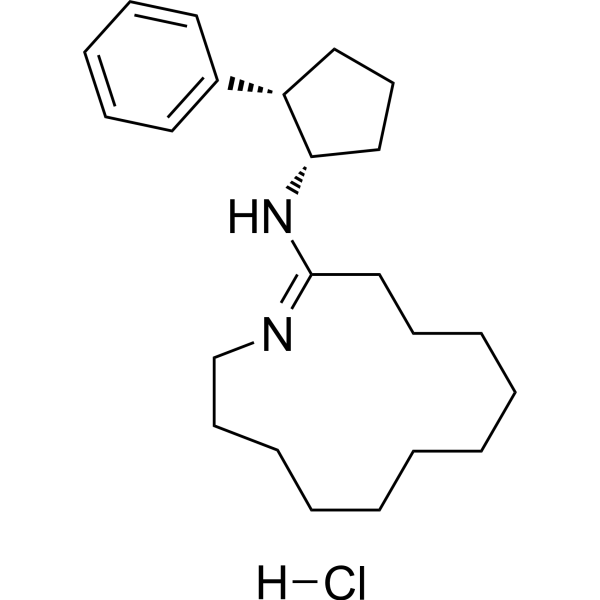 0 ImagesSynonyms: RMI12330AMDL12330A (RMI12330A) is an adenylyl cyclases inhibitor. MDL12330A can inhibit KV channels, increases insulin secretion and Ca2+ levels. MDL12330A accentuates contractions in uterine rings and inhibits cardiac functions. MDL12330A can be used for the research of endocrinology, metabolic and cardiovascular disease .
-
Procainamide hydrochloride
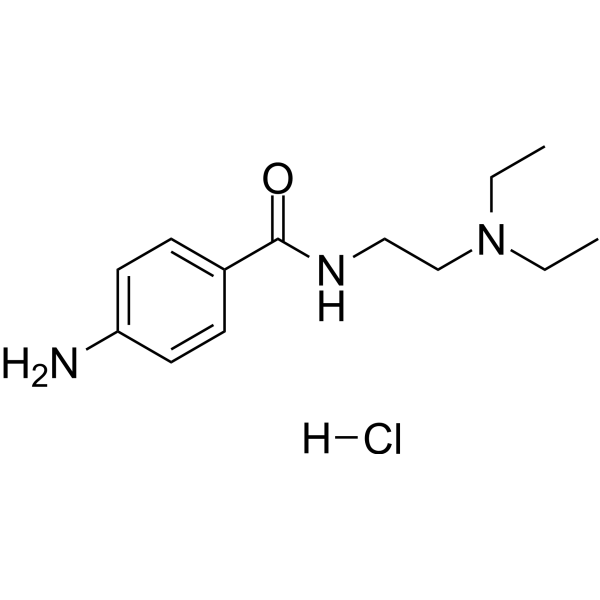 0 ImagesSynonyms: Procaine amide hydrochloride; SP 100 hydrochlorideProcainamide hydrochloride (Procaine amide hydrochloride) is a specific and potent inhibitor of DNA methyltransferase 1 (DNMT1), which reactivates the expression of tumor suppressor factors by demethylating tumor suppressor genes. Procainamide hydrochloride induces vacuolization in various cell types and reduces cell proliferation and migration. Procainamide hydrochloride relaxes airway smooth muscle by activating potassium channels. Procainamide hydrochloride can be used in cancer and arrhythmia research.
-
ML133 hydrochloride
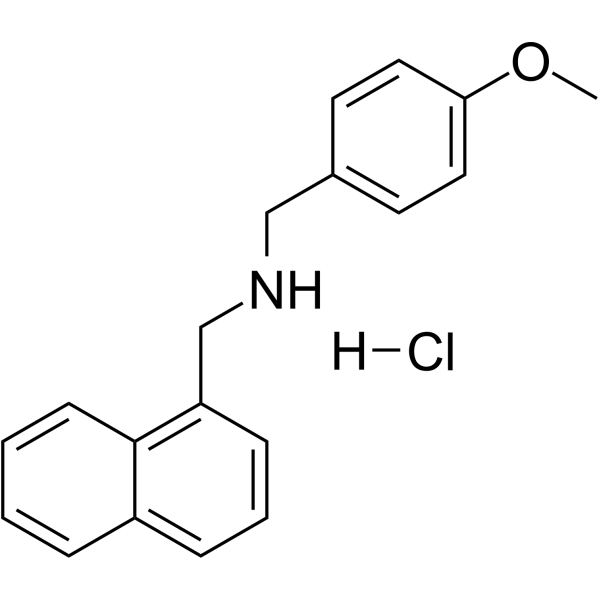 0 ImagesML133 hydrochloride is a selective Kir2 family channels inhibitor, with an IC50 of 1.8 μM at pH 7.4 and 290 nM at pH 8.5.
-
Levosimendan
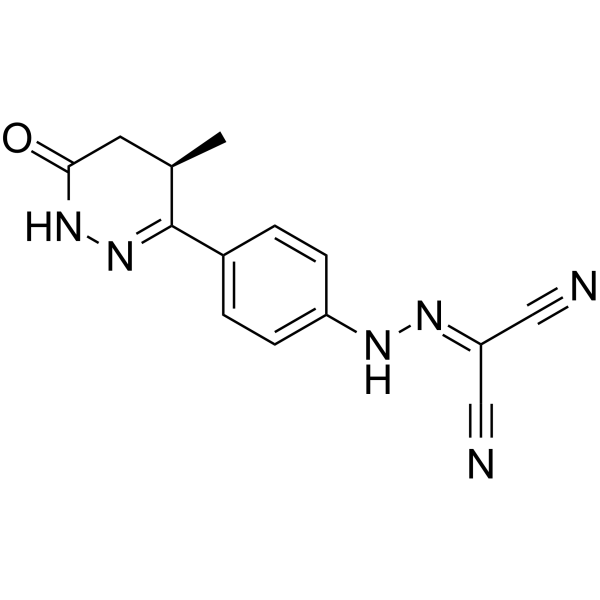 0 ImagesSynonyms: Simsndan; OR-1259Levosimendan (Simsndan; OR-1259) is a calcium sensitiser used in the management of acutely decompensated congestive heart failure.
-
Sotalol hydrochloride
 0 ImagesSotalol hydrochloride (MJ 1999) is an orally active, non-selective β-adrenergic receptor blocker. Sotalol hydrochloride is a potent antiarrhythmic agent that can be used for the research of pediatric arrhythmias. Sotalol hydrochloride blocks β-receptors, and potassium KCNH2 channels. Antiepileptic Agent.
-
AP-6
 0 ImagesAP-6 is a selective inhibitor of TMEM175 with activity in modulating lysosomal function. Acute inhibition of TMEM175 by AP-6 increases lysosomal macromolecular catabolism, thereby accelerating macrophage and other digestive processes. AP-6 may be used in Parkinson's disease research.
-
Chlorzoxazone
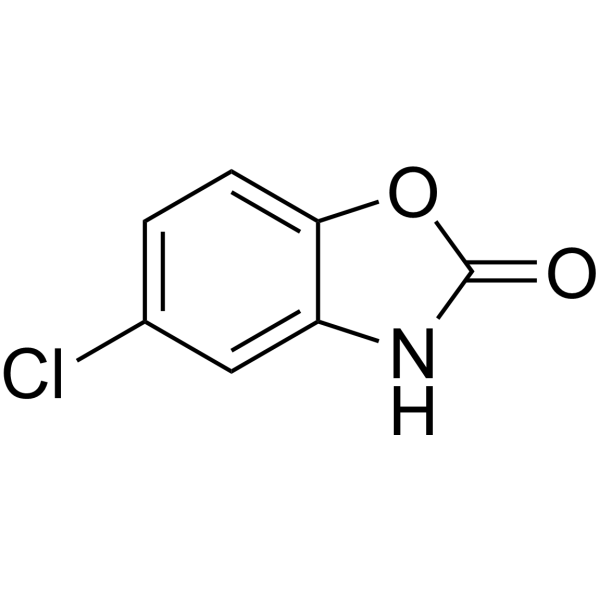 0 ImagesChlorzoxazone is a SK-type potassium channel activator. Chlorzoxazone modulates FOXO3 phosphorylation and Aβ. Chlorzoxazone enhances immunosuppression, attenuates vasoconstriction, attenuates cognitive deficits, and improves experimental autoimmune encephalomyelitis.
-
ML277
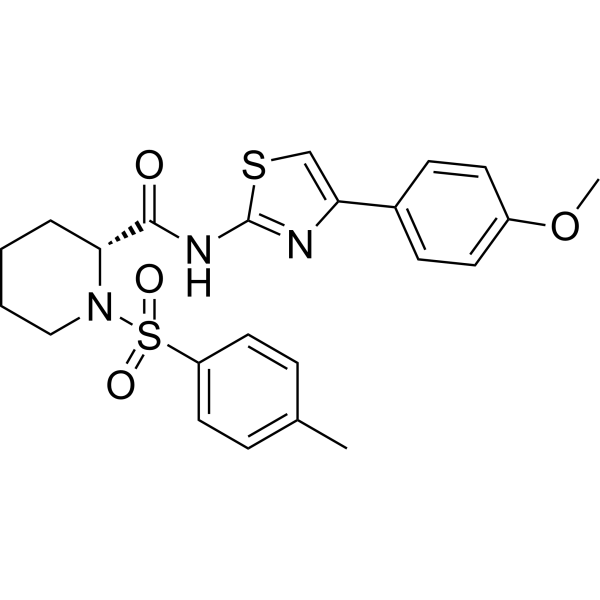 0 ImagesSynonyms: CID-53347902ML277 (CID-53347902) is a potent and selective activator of K(v)7.1 (KCNQ1) potassium channel activator (EC50=270 nM), rescues function of pathophysiologically important mutant channel complexes in human induced pluripotent stem cell-derived cardiomyocytes.
-
Tertiapin-Q
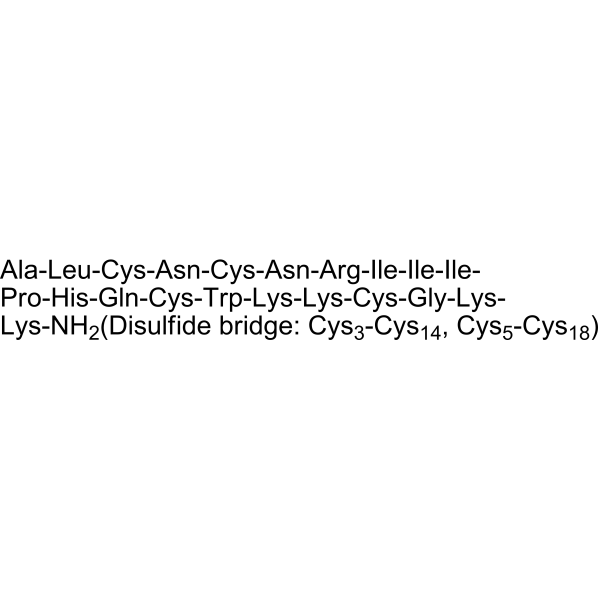 0 ImagesTertiapin-Q is a highly selective blocker of GIRK1/4 heterodimer and ROMK1 (Kir1.1).
-
Quinidine hydrochloride monohydrate
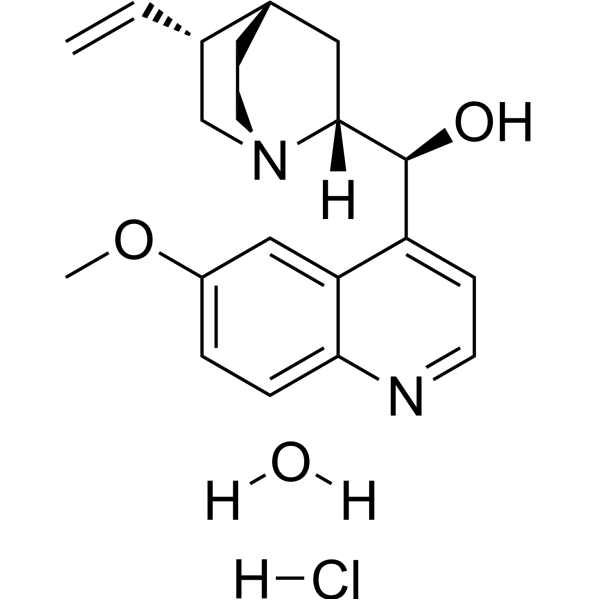 0 ImagesQuinidine hydrochloride monohydrate is an orally active antiarrhythmic agent. Quinidine hydrochloride monohydrate reduces the expression level of P-gp, inhibits P-gp-mediated efflux, increases the intracellular accumulation of P-gp substrates, induces PARP cleavage and Caspase-3 activation, and elevates the proportion of Apoptotic cells at the sub-G1 phase. Quinidine hydrochloride monohydrate exerts sustained block and open-channel block effects on IK(f). Quinidine hydrochloride monohydrate alters the urinary metabolic ratio of Amphetamine, modulates the Pentylenetetrazol-induced seizure threshold, and regulates the anticonvulsant effect of Dextromethorphan. Quinidine hydrochloride monohydrate can be used in studies related to uterine sarcoma and seizures.
-
Daurisoline
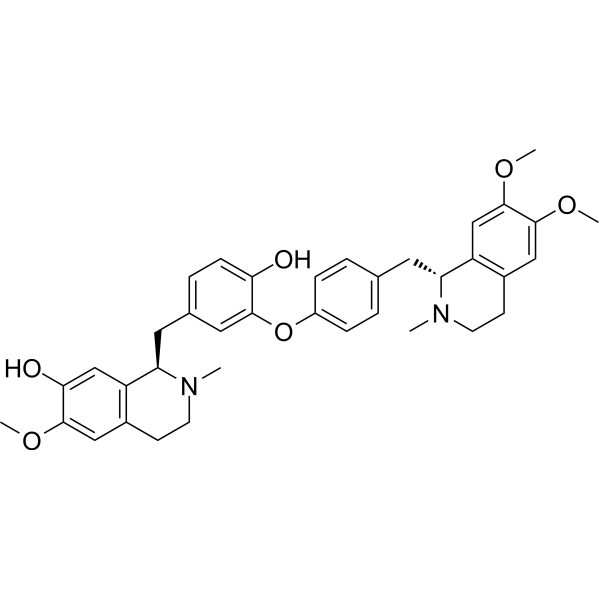 0 ImagesSynonyms: (R,R)-Daurisoline
-
Flupirtine Maleate
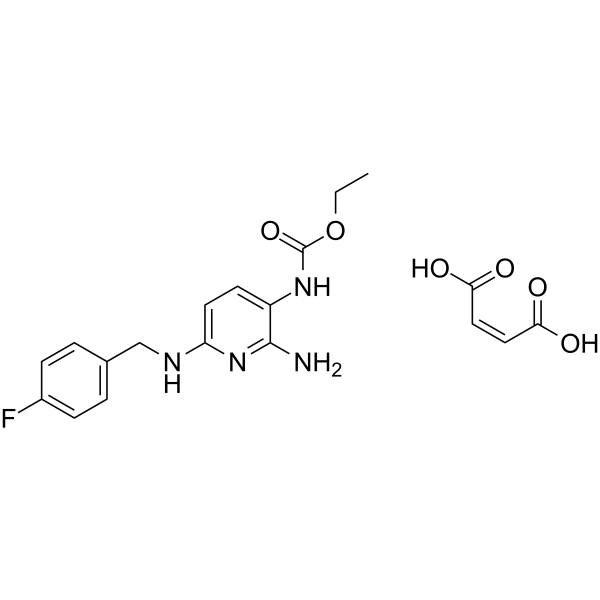 0 ImagesSynonyms: D 9998 MaleateFlupirtine (D 9998) Maleate is an orally active, blood-brain barrier-crossing non-opioid analgesic and neuroprotective agent. Flupirtine Maleate is a neuronal potassium channel opener (Kv7 activator), a NMDA receptor antagonist and a GABA receptor activator. Flupirtine Maleate stabilizes blood-brain-barrier integrity, reduces oxidative stress and brain leukocyte infiltration, enhances angioneurogenesis, suppresses calcium influx, stabilizes neuronal resting membrane potential, and counteracts focal cerebral ischemia. Flupirtine Maleate exhibits analgesic, muscle relaxant properties, protects neurons from excitotoxic, ischemic, or cytokine-mediated death. Flupirtine Maleate functions as a non-opioid analgesic without antipyretic or antiphlogistic properties, shows no relevant affinity to opiate receptor. Flupirtine Maleate can be used for the research of focal cerebral ischemia, pain, Alzheimer’s disease, or multiple sclerosis.